Carpet Chair Mats for Home Offices: A Calm, Honest Look

Some mornings, I notice the small things more than usual. The soft sound of coffee brewing, the way sunlight hits the rug in my office corner, and, honestly, how much effort it takes to roll my chair across carpet that’s seen better days. It’s one of those everyday annoyances you live with until you finally don’t. That’s usually when Carpet Chair Mats enter the conversation.
Product overview
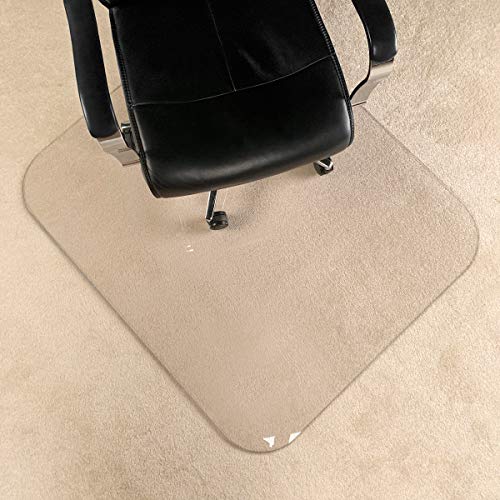
Carpet chair mats are flat protective surfaces designed to sit on top of carpeted floors under desk chairs. Their main job is simple: reduce friction so your chair rolls smoothly, while protecting carpet fibers from wear, dents, and those stubborn wheel tracks that never quite bounce back.
People care about them because office chairs are hard on carpet. Over time, the constant rolling compresses fibers, traps dirt, and can even tear low-pile carpet. A decent mat spreads the weight, makes movement easier, and helps the carpet last longer. It’s not glamorous, but it solves a real, everyday problem.
Pros and cons
Pros
-
Makes rolling an office chair noticeably easier on carpet
-
Helps prevent carpet dents and long-term fiber damage
-
Reduces strain on knees and hips from constant pushing
-
Available in different thicknesses for low- and medium-pile carpet
Cons
-
Cheap mats can crack or curl at the edges over time
-
Some models slide around on plush carpet
-
Heavier-duty options cost more than expected
-
Clear plastic shows dust and scuffs quickly
Real-world performance and quality
In daily use, the biggest difference is effort. With a mat in place, you don’t think about moving your chair anymore—it just happens. On medium-pile carpet, thicker mats (around 0.2 inches or more) tend to stay put better and don’t flex as much under weight.
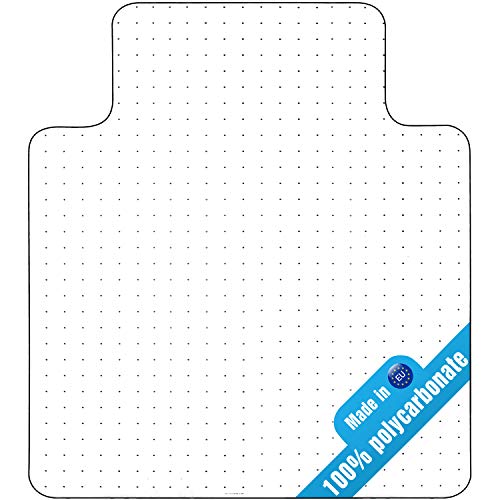
Durability depends heavily on material. PVC mats are common and affordable, but they can become brittle after a couple of years, especially in rooms with big temperature swings. Polycarbonate mats cost more, but they hold up better, stay flatter, and don’t crack as easily. That lines up with manufacturer specs and long-term user feedback I’ve read while researching.
Comfort-wise, you don’t really “feel” the mat once it’s down, which is a good thing. The only ongoing annoyance is maintenance. Dust, pet hair, and chair scuffs show up fast, especially on clear mats. A quick wipe every week or so keeps it from looking tired.
Who it’s for
Carpet chair mats make sense for:
-
Home office workers on carpeted floors
-
Anyone using a rolling chair for several hours a day
-
Renters who want to protect carpet from permanent damage
-
People with knee or joint discomfort who want smoother movement
They’re especially helpful in long-term setups where the desk and chair stay in one place.
Who should avoid it
You might want to skip carpet chair mats if:
-
Your office has hard flooring like wood or tile
-
Your carpet is very thick or shag-style (most mats won’t grip well)
-
You rarely roll your chair or use a stationary chair instead
In very plush carpeted rooms, switching to a hard-floor mat placed over a rug, or even using different chair casters designed for carpet, can be a better option.
Why consider buying
The real value isn’t excitement—it’s consistency. A good carpet mat protects flooring, reduces daily strain, and quietly does its job for years. It’s not about transforming your workspace overnight. It’s about avoiding slow, expensive damage and making everyday movement easier.
That said, not every mat is worth buying. Ultra-thin models often feel fine at first but lose shape quickly. Spending a bit more upfront usually pays off in longevity, especially if you work from home most days.
Where to buy for better value
Amazon tends to have the widest selection of Carpet Chair Mats, with many sizes and materials available. On Best2Buy.reviews, readers can click product links that redirect to Amazon for fast, secure checkout, which is convenient when you want quick delivery and easy returns.
Walmart often carries budget-friendly options, especially in-store, but thickness and material choices can be limited. Official brand websites sometimes offer better warranties, though prices are usually higher and shipping slower.
Even on sale, a flimsy mat isn’t a good deal. If it cracks within a year, it’s money wasted and more plastic in a landfill.
Frequently asked questions (FAQ)
Do carpet chair mats work on thick carpet?
They work best on low- to medium-pile carpet. Thick or plush carpet often causes mats to shift or sink.
How thick should a carpet chair mat be?
For carpet, thicker is usually better. Around 0.2 inches or more helps with stability and durability.
Are polycarbonate mats safer than PVC?
Polycarbonate mats are generally more durable and less prone to cracking. Many manufacturers also note they’re free from certain plasticizers found in PVC.
Do they damage carpet underneath?
When used correctly, they protect carpet. Poorly fitted mats or ones that slide can cause edge wear over time.
Quick verdict
Carpet chair mats are practical tools, not exciting purchases. Choose a thick, well-made one, and it quietly improves daily comfort while protecting your carpet. Cheap options tend to disappoint.
Final thoughts
I’ve learned that comfort often comes from small, thoughtful choices. A chair mat won’t change your life, but it can make long workdays feel a little smoother, a little less tiring. To be fair, your mileage may vary depending on carpet type and chair weight, but for many home offices, it’s a sensible addition.