
Step Drill Bits Review: Pros, Cons, Performance & Buying Advice

The kettle was doing its usual slow boil this morning, rain tapping the window in that familiar London way, when I realised how often small DIY jobs get delayed for one reason: the wrong drill bit. Not the drill itself — just the bit. That’s usually where Step Drill Bits enter the conversation.
1. Product overview
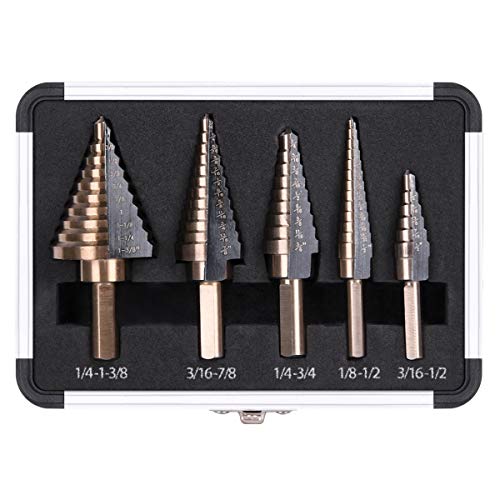
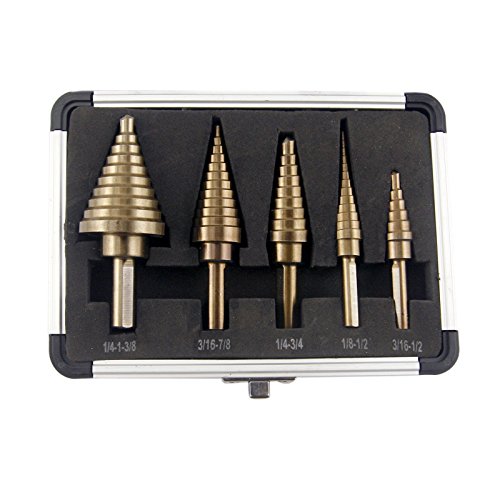
Step drill bits are cone-shaped drill bits designed to create clean, precise holes of multiple sizes using a single tool. Instead of switching bits repeatedly, you drill deeper to reach the size you need.
They’re commonly used for:
-
Thin metal sheets
-
Plastic panels
-
Aluminum
-
Electrical boxes
-
Automotive and HVAC work
People are drawn to them because they promise simplicity: fewer tool changes, smoother holes, and less frustration when working with thinner materials.

2. Pros and cons
Pros
-
One bit covers multiple hole sizes
-
Clean, burr-reduced holes in thin materials
-
Faster workflow for repetitive tasks
-
Less chance of material cracking compared to standard twist bits
-
Compact and easy to store
Cons
-
Not ideal for thick steel or hardwood
-
Quality varies significantly between brands
-
Can wear quickly if overheated
-
Size markings may fade on cheaper models
3. Real-world performance and quality
In practical use, step drill bits shine most in light-to-medium DIY tasks. Electrical enclosures, metal brackets, plastic housings — this is their comfort zone.
What genuinely stands out is control. Because each step increases gradually, it’s easier to stop at the exact hole size you need. For someone doing cabinetry hardware or electrical knockouts, that control matters.
The main drawback is durability. Lower-quality sets tend to dull faster, especially when used without proper speed control or lubrication. Heat buildup is the enemy here. Once the edge softens, performance drops quickly.
Higher-end versions with titanium or cobalt coatings hold up better, but they’re still not a replacement for heavy-duty drilling in thick steel.
4. Who it’s for
Step drill bits make the most sense for:
-
Homeowners doing occasional repairs
-
DIY enthusiasts working with metal or plastic
-
Electricians installing junction boxes
-
Automotive hobbyists modifying panels
-
Anyone tired of swapping drill bits constantly
If your projects involve thin materials and precise sizing, these bits feel genuinely useful.
5. Who should avoid it
You may want to skip step drill bits if:
-
You regularly drill through thick steel or hardwood
-
You need deep, uniform holes in dense materials
-
You expect one bit to replace all others
-
You work at high RPMs without speed control
In those cases, traditional twist bits or hole saws are often a better fit.
6. Why consider buying
The real value isn’t novelty — it’s efficiency.
A good step drill bit reduces setup time, lowers error rates, and simplifies everyday tasks. For small projects, it often delivers cleaner results with less effort, especially when precision matters more than raw power.
Just don’t expect miracles. Used correctly and within its limits, it’s a practical tool rather than a magical one.
7. Where to buy for better value
-
Amazon: Wide selection, easy returns, but quality varies. Stick to well-reviewed brands.
-
Walmart: Convenient pricing, though selection may be limited in-store.
-
Brand websites: Higher prices, but clearer specifications and better coatings.
A cheap set can make sense for very occasional use. However, if the price feels too low, durability usually suffers. Even on sale, poorly hardened bits aren’t worth buying — they’ll dull before you finish your second project.
8. Frequently asked questions (FAQ)
Are step drill bits good for stainless steel?
They can work on thin stainless steel, but only at low speeds with lubrication. For thicker stainless, standard cobalt bits perform better.
Do step drill bits work on wood?
They can, but they’re not designed for it. Wood-specific bits give cleaner, deeper results.
How long do step drill bits last?
Lifespan depends heavily on material, speed, and cooling. Quality coatings extend usability, but overheating shortens it quickly.
Can step drill bits replace hole saws?
For thin materials, sometimes yes. For thicker cuts or large diameters, hole saws remain the better choice.
9. Quick verdict
Step drill bits are genuinely useful for the right kind of work. They’re efficient, tidy, and convenient — but only when used within their limits. Choose quality over quantity, and they’ll earn their place in your toolbox.
10. Final thoughts
I’ve always believed tools should make life quieter, not louder — fewer stops, fewer mistakes, fewer muttered complaints under your breath. Step drill bits won’t replace everything, but for the right jobs, they simplify things nicely.
And when the rain’s still falling outside and you just want to finish a small task before the kettle clicks off again, that kind of simplicity is worth having.